
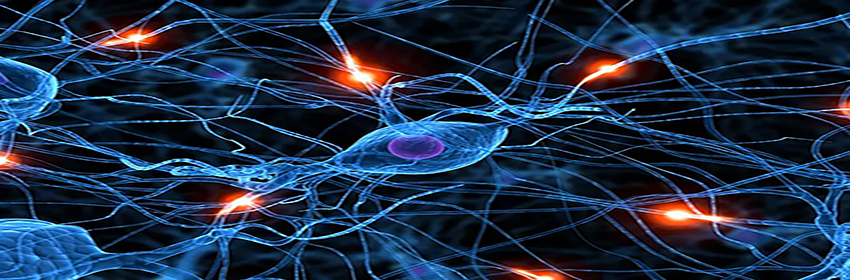
Neural networks…that sounds pretty geeky! It may sound geeky, but it is at the heart of how the universe works, particularly for all humans.
Around 1984, a physics professor at Brooklyn College told me I should study “neural networks.” I was then an associate vice president responsible for academic and administrative computing, and I thought it was worth looking into. Since computer networking was in its infancy, I thought it would be a good idea to explore this new networking concept.
Neural networking, a concept conceived in the early 1940s during World War II, is now at the heart of artificial intelligence (AI). It’s not just about human brains; examples of neural-type networks can be found in the most surprising places in nature, demonstrating the interconnectedness of our world.
The term neural networking is used to describe a type of AI that mimics the structure and functioning of the human brain. These networks process information by passing information from one node to the next, allowing the AI system to learn patterns, recognize relationships, and make predictions. The key takeaway is the word “mimic”. AI mimics the way humans learn, form relationships, and make decisions.
Neural networks in nature are not as complex as they may seem. Let’s explore some fascinating yet straightforward examples provided by Perplexity that will make sure you understand this topic better.
- Plant Root Networks: The roots of plants communicate with each other and coordinate growth, distribution of nutrients, and responses to the environment through signaling networks that resemble neural networks in their structure and function.
- Slime Molds: Slime molds such as Physarum polycephalum form complex networks of protoplasmic tubes that can “solve” optimization problems (like shortest paths through mazes) using distributed information processing, much like a neural network does, but without a nervous system.
- Gene Regulatory Networks: In living cells, networks of genes and proteins interact with one another to regulate cell function. The interconnected pathways and their ability to process signals and feedback can be described mathematically as a kind of neural network.
- Synthetic Chemical Neural Networks: Researchers have created synthetic chemical systems and even networks using DNA that process information in a neural-like fashion, classifying patterns or signals using network dynamics similar to artificial neural networks.
Another example of neural networking that has stuck with me is the behavior of ants. Most worker ants leave their colony looking for food in the morning. They move randomly until they discover food or encounter a trail left by other ants. Since ants cannot talk or write, how do they know if another ant has found food? An ant that’s found food leaves a trail of chemicals called pheromones that goes from the colony to the food source. This allows other ants to follow the trail to the food. As more ants follow the trail, the trail becomes broader and more popular. Soon, hundreds of ants follow the trail to the food. [Did you ever wonder how ants were able to quickly find that piece of bread you dropped at a picnic?]
These neural network-type examples demonstrate a fundamental way the universe operates. If almost anything receives a message that allows the entity to be fed, happy, satiated, or some other type of positive feedback, it accepts the message and follows its path for more. That’s how humans learn what they learn.
How can the complexity of the human mind be compared to that of slime molds? Well, nature’s basic structure says that it can. Our brains are biological, even though transcendentalists and spiritualists claim otherwise.
Without getting into the complexity of neural networks, let’s do a 30,000-foot flyover.
Essentially, if a human brain neuron or a slime mold receives a positive message, the message’s path gets a “sugar rush.” As long as the message is positive or considered to be “true”, the neural path remains intact, grows, and becomes even more permanent (like the ants who found the path to food).
When we were in elementary school, we learned that 2 + 2 = 4. If we said the answer was 5, we failed the test. When we agreed that it was 4, the teacher smiled and gave us a gold star.
A less friendly experience in learning is when we know that 2 + 2 = 4, but everyone says the correct answer is 3. In this case, the student becomes disenchanted with his “educational” experience. Neural pathways can also lead to negative feedback (e.g., “there is no path to food at this school”).
AI works in much the same way. AI, expressed as large language models, utilizes the principles of neural networking, Markov chains, extensive information, extensive training, and sophisticated prediction.
Enough about AI. What about neural networking for average humans? As it turns out, humans use neural networking all the time. For example, I used AI neural networking when I asked, “How can propaganda be compared to neural networking?”
I asked two AIs, Perplexity and Grok, the same question in the paragraph above. Perplexity provided an almost instant, detailed response that was summarized as follows: “This analogy illustrates the ways both propaganda and neural networks mold outputs through deliberate repetition, filtering, and reinforcement of patterns.”
Grok took about three minutes to respond fully. Its initial instant response was simple-minded and largely incorrect. However, after about three minutes, it said,” These comparisons highlight propaganda not just as information warfare but as a process mimicking neural computation—exploiting connections, biases, and vulnerabilities in human or artificial systems. While metaphorical, they offer insights into how ideas ‘learn’ to spread and persist in societies.”
The bottom line is that, just like ants following a trail of pheromones or a drug addict seeking a fix in the park, humans often seek comforting, self-reinforcing propaganda that makes them feel good.

Those committed to MAGA (formerly the Republican Party) watch MAGA news sources. These well-funded news organs supply the friendly pabulum required to keep them in the MAGA fold. Likewise, the ultra-Liberal folks receive their friendly pabulum from their trusted news sources. Even independent, middle-of-the-road people can live in their own information bubbles. Since modern life is complex enough, most of us lack the time and energy to sort through the competing propaganda messages to find “truth” and understanding. Most propagandists understand this and seek to befuddle everyone with half-truths, seducing potential audiences with friendly messages that reinforce their biases.
I venture to say that most adult Americans live in some political cave or silo. Most of us have followed the food trail of someone we trust or like (usually a family member) and stayed in their colony. Most of us never check facts or consider the possibility of an error in our political judgment. We are stuck in our colony or silo, and that is that.
Since our personal neural network is wired to receive and accept propaganda as gospel, many of us remain in an endless feedback loop of lies and deception.
Living in a network of lies and deception does not seem like a recipe for personal, family, or national success. Even successful slime molds know better. Believe me or not…