
OpenAI, the company that owns ChatGPT, has all the hallmarks of a classic Silicon Valley flameout. Silicon Valley history is littered with the corpses of well-funded, but underproducing startups.
I have been testing and using several AI services over the last three years, and I was very impressed with ChatGPT in the beginning. However, recently I have been comparing ChatGPT against the likes of CoPilot, Claude, Grok, and Gemini.
Since there are so many categories of AI, it is impossible to say that one product dominates. A product that is good for business productivity might not be good for general chatbot discussions. ElevenLabs is an AI that dominates voice applications. Perplexity is excellent for research. However, ChatGPT, CoPilot, Claude, Grok, and Gemini are more dominant and general-purpose.
Over the last six months, I have noticed a comparative degradation in ChatGPT. It remembers my past chats and has an addictive personality (e.g., “that was an excellent question”, “how else may I help you”, and so on.) However, I have noticed that other services have generally become smarter and more advanced, while ChatGPT has been dumbed down for some reason.
Last night I asked ChatGPT to create a simple spreadsheet with 50 rows and 3 columns. I wanted to know the estimated value of residential real estate and the real estate taxes collected by each state. After receiving this spreadsheet, I wanted to see which states collected the most real estate taxes as a percentage of total real estate value. In other words, I wanted to know the tax burden on residential homeowners by state.
So, I asked ChatGPT to provide me with my spreadsheet. To my surprise, it said that it would take 15 minutes. It then begins an endless loop of questions: 1) Do you want to include DC? 2) Would you like me to include detailed explanations for each data source? 3) Do you want the spreadsheet with a tab or comma delimiter, etc.? I appreciate the appeal of getting me to specify what I want, but I’ve done this many times, and I just wanted two data items for each state. So, I patiently asked each question to ChatGPT and waited and waited.
While waiting, I asked the same question to Claude ( claude.ai ) in another window. Claude asked me one question and gave me the spreadsheet in less than 2 minutes. It was exactly what I wanted.
Parenthetically, the ranking of real estate tax burdens showed that Illinois residents had the highest burden. Ohio and Texas had the 9th- and 10th-highest burdens, respectively. Washington State and Oregon were in the middle, ranked 25th and 26th, respectively. California ranked 34, Colorado ranked 40, and Arizona ranked 48. The state with the least real estate tax burden was Hawaii. It is no wonder those in Epstein Class, like Mark Zuckerberg, are buying real estate in Hawaii. [The Epstein Class is the new socio-economic group that can commit crimes with near impunity.]
I went back to my ChatGPT window and told it to cancel my request. ChatGPT asked why, and I told it that I couldn’t wait 15 minutes, so I got another AI to do the job. It apologized and was happy that I got what I wanted. A few minutes later, I canceled my monthly ChatGPT “Plus” subscription.
I am beginning to understand why investors are starting to panic over OpenAI’s burn rate (money being burned) of $15,000,000 per day. The ramifications of the potential demise of OpenAI for the economy are significant, as so much money is being invested in AI in general and OpenAI in particular. The investments are not only for services but also for supporting infrastructure (e.g., data centers, power plants, networking, and consulting services). Importantly, Microsoft is a major investor in OpenAI. OpenAI and its ilk seem like another house of cards, like the dot.com bust and the 2007-2008 mortgage busts.
I am not a total pessimist, though. Just as Amazon emerged from the dot-com bust to revolutionize direct-to-customer retailing, a few companies will survive and benefit from the coming AI bust. Like it or not, AI is here to stay.
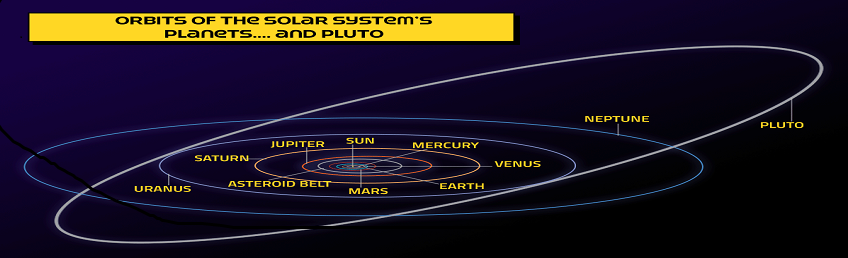
However, unless ChatGPT’s large language model (LLM) can find a home on planet Earth, it will be beamed to the dwarf planet, Pluto, within the next two years.
For those with a New York Times subscription, there is a good article from January 13, 2026: https://www.nytimes.com/2026/01/13/opinion/openai-ai-bubble-financing.html