
Many aspects of life are predictable. Gravity has kept me grounded on planet Earth for as long as I can remember. If I do not sleep enough, I am cranky the next day. I do not keep friends if I am dishonest and treat them badly. Sometimes people believe they can overcome the “normal” world. They think they can overcome gravity, do not need a good night’s sleep, and believe their charm allows them to treat others like objects to manipulate.

The 2025 Trump Tariff War is an example of believing that the “normal” world can be overcome. The assumption that the sudden imposition of massive protectionist tariffs is a new silver bullet is pure fantasy. William McKinley and Herbert Hoover tried it, but both cases were a disaster. The impulsive imposition of hefty tariffs adds cost to imported items, creates supply chain disruptions, creates scarcities in many needed products, and breeds international conflict. Moreover, tariffs are a regressive tax that forces low-income Americans to pay at the same rate as billionaires. There are compelling reasons to revise the existing trade system, but the Trump Liberation Day is an amateurish, macho fiasco, not a potential solution.
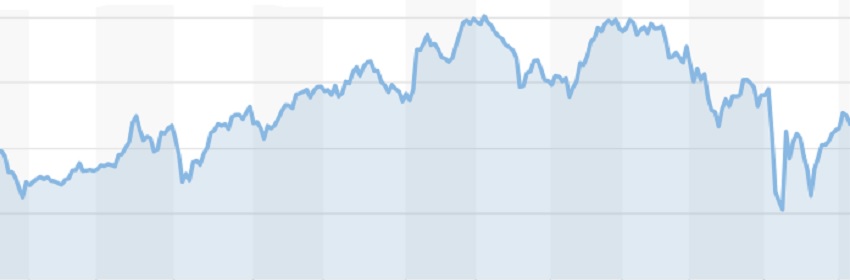
The immediate and plausible reaction to Liberation Day was a dramatic decline in all the stock markets. Trillions in “paper” losses were attributed to Trump’s action. However, the markets have slowly reversed, with nine or ten days of market gains. How is this possible if nothing has fundamentally changed?
I was listening to some financial commentators on CNBC on May 6, 2025, when one woman opened an interesting dialogue with three male panel members. She repeated my question: If the misguided tariff war was still active, why have the markets rebounded like nothing has happened? Why are multiples (price-to-earnings) at the same levels as before Liberation Day? The three men very politely responded that all the experts said that all the statistics said the economy was strong, and that Trump would surely resolve the tariff issue soon. When she replied that all the existing data was stale because it was collected before Liberation Day, the men politely reported that all the experts they listened to said the underlying economy was and is strong. Their discussion continued along the same lines.
I agree with the female analyst. She is not trapped in the “quant” world of finance that has fascinated investors for decades. My definition of the quant world is an almost single-minded way of analyzing financial issues using high-powered mathematics. Quants look at moving averages, trigger points, and other exotic statistics to understand economic reality and make financial decisions. The major weakness of the quant approach is that its statistics are abstract representations of reality. Taken to an extreme, they become abstractions of abstractions. Over time, as these abstractions become divorced from reality, they figuratively believe they can overcome gravity, do not need sleep, and treat other people like dirt without any consequences. In addition to becoming detached from reality, quants are prisoners of their data sources. Their data sources could be inaccurate, but they are always dated.
Tesla is a prime example of the inadequacy of overdependence on quantitative analysis. On December 17, 2024, its stock was priced at $480; by April 8, 2025, it had dropped to $222. Quantitative analysis could only document the decline in its market value, but could not predict the catastrophic fall. The decrease in Tesla’s value occurred outside the purview of quantitative analysis. The underlying cause was a foolish man taking a chainsaw to the Federal government and upsetting the entire world of EV customers. Quantitative analysis might robotically say, “buy Tesla stock when the price drops to $300” on February 25, 2025, but would that have been smart?

Many investors slavishly follow the quant and expert crowd, who seek to assure the world they know what to do. Financial confidence is a vital element in any economy. However, mindlessly ignoring the reality of the Trump Trade War is a mistake. I did not want the stock market to fall by 18% or the gross domestic product to fall by 0.3% in the last quarter; however, we should not be fooled by charlatans at the mercy of a quantitative bias who tell us to ignore Trump’s war on trade. Unless Trump restrains himself soon, the entire world economy will suffer. Since America is a significant factor in the world economy, we will suffer too. Of course, Trump will undoubtedly blink and roll back the tariffs he said he wouldn’t. He will then claim a fantastic trade victory while everyone wonders what he will do next to make America grate their teeth again.