Make America Like Yesterday (MALY)
This article focuses on the MAGA-led march into a potential economic disaster. Ignore Trump’s tariffs, immigration, and deficit spending. A longer-term danger lies in how America acquires and distributes energy.
Over the last year or so, I’ve read several articles about the energy policies in various countries. As much as most of us live in our own little bubbles, it is clear that there are differences in the way countries think about energy. The American fossil fuel lobby has been forever preaching “drill-baby-drill” and “dig-baby-dig”, just like the propaganda of the tobacco industry urged Americans to “smoke-baby-smoke.” To encourage women to smoke, their catch phrase was “You’ve come a long way, baby.” They wanted young, independent women to develop the same nasty habit as old, macho men. Many Americans have fallen and continue to fall for the unrelenting propaganda of these industries, including tobacco, fast food, digital currencies, and fossil fuels. Consistent with Big Oil propaganda, if the price of gasoline falls by thirty cents, most people overlook the broader energy picture.
Sufficient energy is a requirement for any advanced economy. Without energy, homes go dark, transportation grinds to a halt, and the economy comes to a standstill. Civilization progressively evolved from wood to coal to petrochemicals to “green” energy sources. Access to energy products has historically been a catalyst for international conflict, as these resources are not evenly distributed globally. Some countries with small populations, such as Saudi Arabia, have abundant reserves of petrochemicals, whereas countries with much larger populations have almost no petrochemical resources.
Interestingly, the countries whose economies are primarily built on selling energy products to the rest of the world suffer from what one man called “The curse of the devil’s excrement.” This is counterintuitive because what country wouldn’t want to have a valuable commodity sitting under its ground? However, history shows that possession of the devil’s excrement often causes the region or nation to fail to diversify its economy. Although the following countries have significant differences, they all currently suffer from the curse, or will in the future: Venezuela, Russia, Saudi Arabia, Iraq, Iran, and the small Gulf States.
This phenomenon is similar to that of the descendants of the wealthy who no longer need to work or challenge themselves. These fortunate individuals lead a life of luxury and only need to review their investments periodically. However, we find that most of the super-wealthy Americans of the 19th century (e.g., Vanderbilts, Astors, etc.) slowly squandered their inheritances. Any person, family, region, or nation that is fortunate enough to have some “easy” wealth but almost always lacks the motivation to prepare for the future will eventually lose their wealth. There is also the complex of psychological conditions resulting from inherited wealth. Among the issues are feelings of unworthiness, internal conflicts, and luxury shame. Most of us wouldn’t understand the depths of despair experienced by wealthy people; with my tongue in my cheek, it must be horrible.
The State of America’s Energy Infrastructure
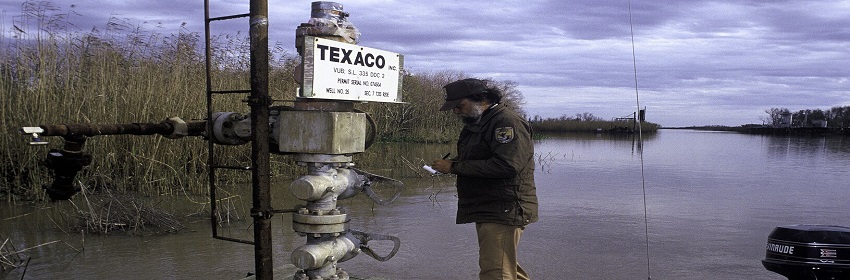
America’s energy strategy vacillates between the party that controls the Federal government. We oscillate between attempts to develop future-oriented energy policies and reversion to letting 1,000 oil wells bloom anywhere, anytime. Our energy policy has been at the mercy of both foreign and domestic oil and gas corporations for decades.
Most of us do not worry about our energy supplies; we primarily focus on their cost. We often overlook a significant difference in the prices of electricity in the U.S. Residential customers pay at least 40% more per kilowatt-hour than non-residential customers. Moreover, electricity rates for residential customers increase from 10 to 15% each year. These trends are likely to continue, if not become more dire, as demand increases and the cost of natural gas increases.
As Artificial Intelligence becomes a larger factor in our economy, more data centers will be needed. This will further stress the American grid. A Bain & Company analysis stated that data centers could account for 44% of the U.S. electricity load growth by 2028.
America’s energy situation may not seem dire to most Americans at present. Still, as geopolitics become increasingly unsettled due to the resurgence of authoritarianism, we need to develop an intelligent energy strategy that most Americans can accept.
Specific Examples of the Dysfunction of America’s 19th-Century Energy Thinking
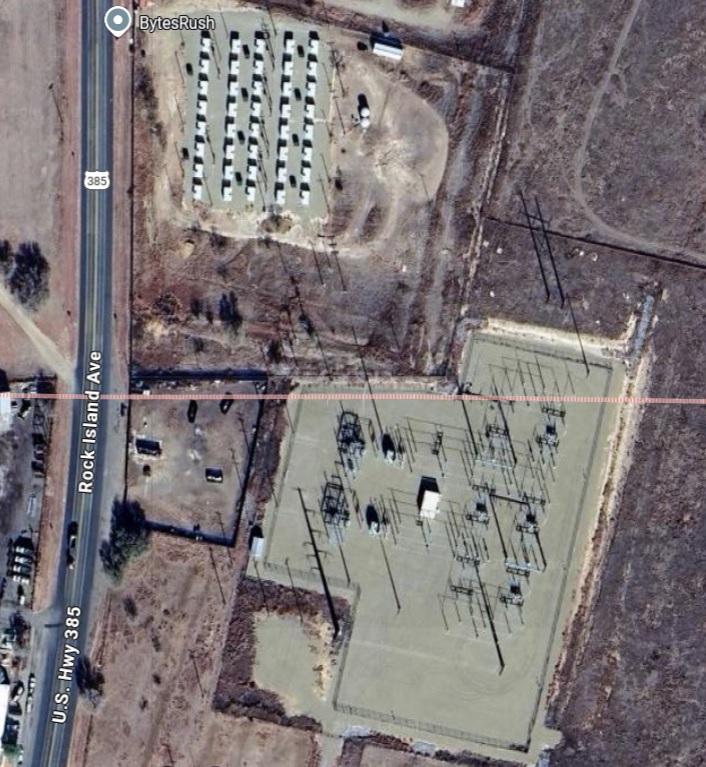
Over a year ago, I read about a 24-year-old Chinese investor (living in a penthouse in Manhattan) on a temporary visa who established a Bitcoin mining operation in the small Texas town (population approximately 350) where I grew up. Before you envision mining equipment and digging operations, I would like to set the record straight. Bitcoin mining involves constructing a building or a series of huts that house hundreds of personal computer-like devices. These computers consume a significant amount of energy to create, verify, and maintain the Bitcoin infrastructure. There are Bitcoin mining operations all over the world, but I will not go into the wisdom of Bitcoin mining or investing in Bitcoin. I was astounded when I went on Google Maps to see this new mining operation, named BytesRush, in my hometown. Unsurprisingly, a massive electrical substation (huge for the town) was nearby to power these computers 24×7. BytesRush likely consumes more electricity in its footprint than the rest of the county, spanning 1,462 square miles and a population of 4,979. Why do states like Arkansas and Texas allow Chinese investors to establish energy-sucking, Bitcoin mining beachheads in our rural areas?
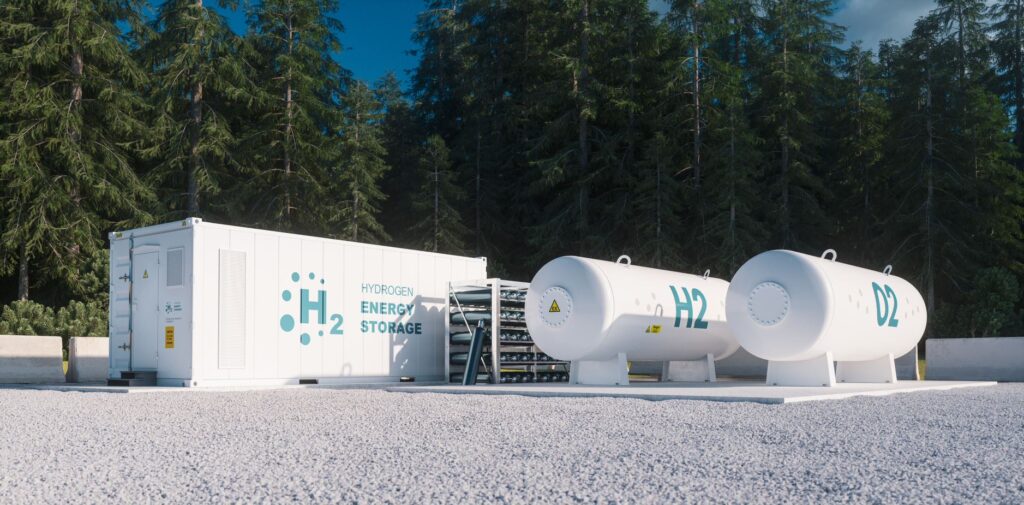
Switching continents, I just read about Chile using its abundant wind and solar resources to produce hydrogen gas by splitting water into hydrogen and oxygen. Although highly volatile, hydrogen is the most abundant element in the universe and one of the promising potential replacements for fossil fuels. However, producing hydrogen has been an energy-intensive process, and without a cheap energy source, it was not economically practical. The equation has changed in Chile, since it has abundant sunshine and mountains adjacent to the ocean, and it is building a massive solar and wind green energy infrastructure. Unlike electricity, which is harder to transport, hydrogen can be bottled and shipped anywhere in the world.
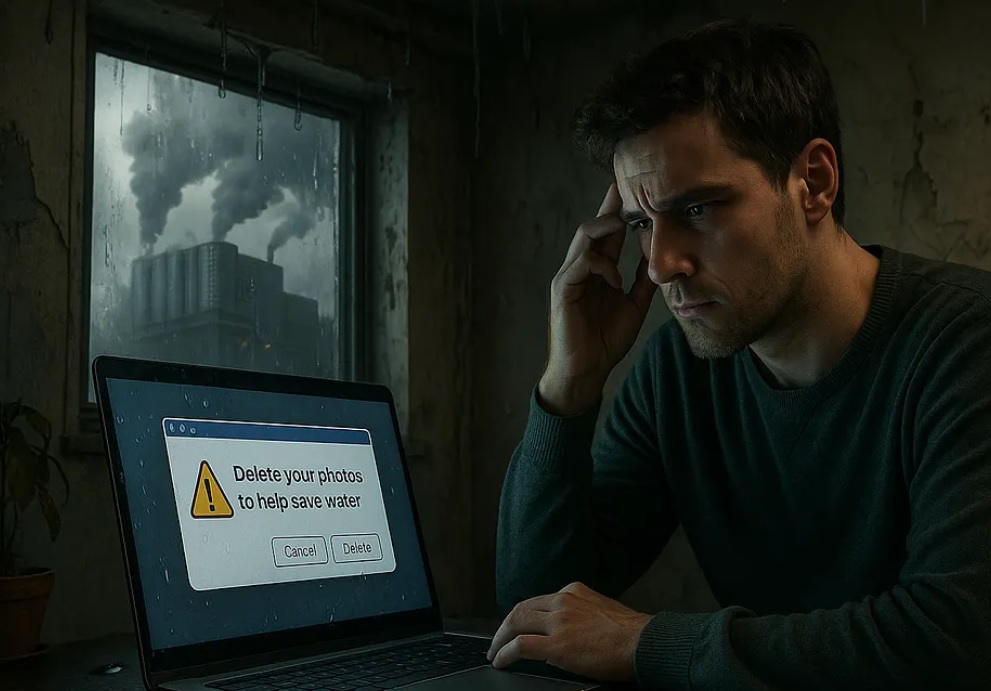
Another recent article described the United Kingdom’s weak electrical infrastructure. As America’s closest ally, this must prove that misery loves company. The UK government just asked its citizens to delete old emails and photos to SAVE WATER. Huh?
Climate change has created the UK’s worst drought in 50 years, and instead of regulating oil companies or the construction of new data centers, the burden is being placed on UK citizens. In reality, deleting emails and photos is, in this case, literally a drop in the bucket. The UK’s leaders are diverting attention and shifting blame for the country’s vulnerable electric grid onto their own citizens.
The Wall Street wolves used a similar strategy during the 2007-2008 financial collapse. Instead of blaming lax controls and deregulation, they blamed average, but admittedly greedy, Americans who were allowed to purchase four or more homes on speculation. Since many Americans will spend more than they can afford, it is easy to rationalize why lenders loan them more money: “They are signing the mortgage documents; it is their fault if they cannot make their payments.” However, while the waiters who bought four houses lost their down payments, it is the rest of us who bailed out the failing economy created by the even greedier financial merchants who made their money off fees. Regardless of the esoteric economic theories about personal responsibility and the free market’s infallible invisible hand, every economy needs some regulation, just like we need regulation for driving. People who suddenly decide to drive on the left side of the road in America cause head-on collisions with innocent drivers. We also need regulation and future-oriented plans in the financial services industry and for energy consumption.
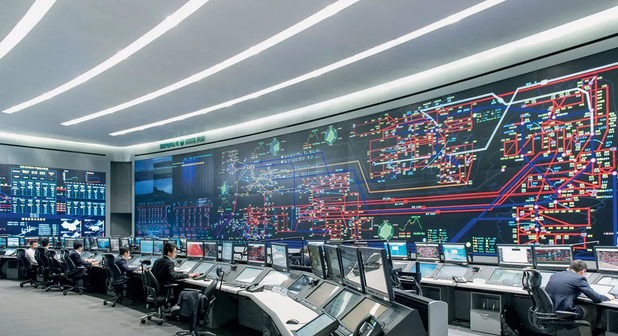
Finally, an article about Silicon Valley researchers’ visit to China caught my attention. They were curious about China’s progress in artificial intelligence (AI) and concerned that it might become a major competitor in Wall Street’s frantic investment rush to AI. In addition to reviewing AI technology, they also examined the primary constraint on AI: the need for electrical energy to power AI data centers.
The visitors from Silicon Valley were stunned by China’s electrical infrastructure. One analyst, Rui Ma, said:
“Energy [in China] is considered a solved problem. The Chinese government’s investment in sustainable energy—from advanced hydropower to next-generation nuclear—means that, relative to many other markets, electricity supply is secure and inexpensive…This is in stark contrast to the U.S., where AI growth is increasingly tied to debates over data center power consumption and grid limitations.”
Rui Ma later said:
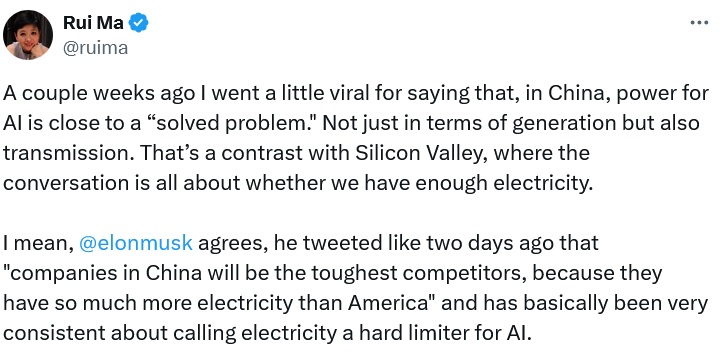
If these warnings are accurate, then America’s exceptionalism may be in jeopardy. China has a Communist political system, but its economy is a very well-organized version of State Capitalism. They do not stagger from one side of the street to the other like a drunk. They do not spout homilies like “Drill-baby-drill” in one administration and “We need a green economy” in the next one. China, our competitor, is focused, organized, and disciplined.
Today, Ohio families pay an additional monthly fee because their data centers consume a significant portion of their electricity. Some of our largest states, which also have abundant fossil fuel industries, have frequent brownouts and blackouts. Climate change is also putting stress on the American grid, even in the best regions in the country. The American grid may begin to look like a weak baseball team whose pitchers give up too many home runs, are taken out of the game, and the team is forced to use an infielder to pitch in the ninth inning. The team finishes the game, but just barely.
In contrast to China, which allows its data centers to “soak up oversupply”, America desperately needs to create more electrical generation. Since President Trump has recently halted most wind and solar programs, our only option is to fall back on the 19th-century solutions of “drill” or “dig.”
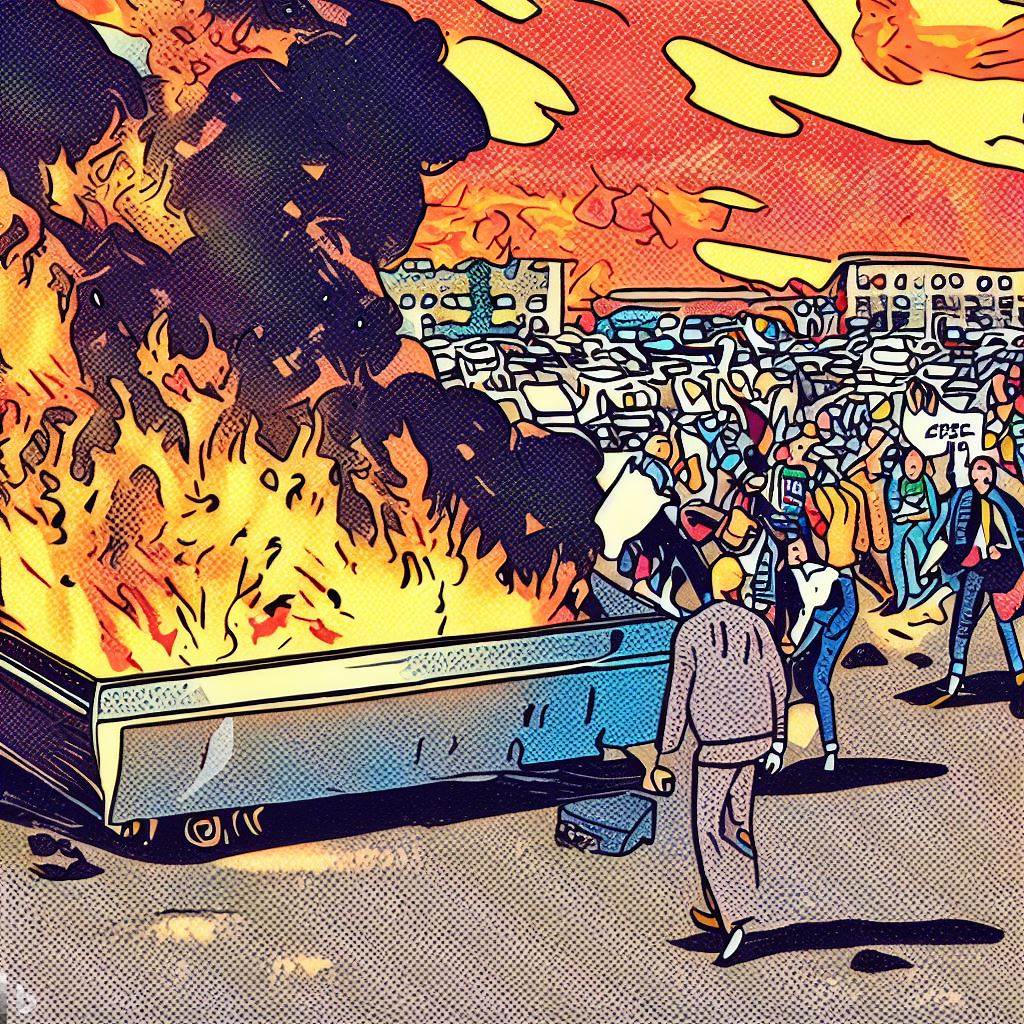
America’s inability to creatively evolve its energy infrastructure problem demonstrates that MAGA’s knee-jerk thinking will not get us to the 22nd century. Our MAGA President’s energy policy is mired in the past, and we will be lucky to reach 2040. Of course, this continues to be music to the ears of Big Oil. However, in the long run, this could be a funeral dirge or dumpster fire for our country.
Why doesn’t the MAGA world care about the future they are leaving their descendants? Are they so fixated on winning the culture war and following a madman back to the 19th century that they ignore their children and grandchildren’s economic future?