

Beliefs about Artificial Intelligence
How does everyone feel about artificial intelligence (AI)?
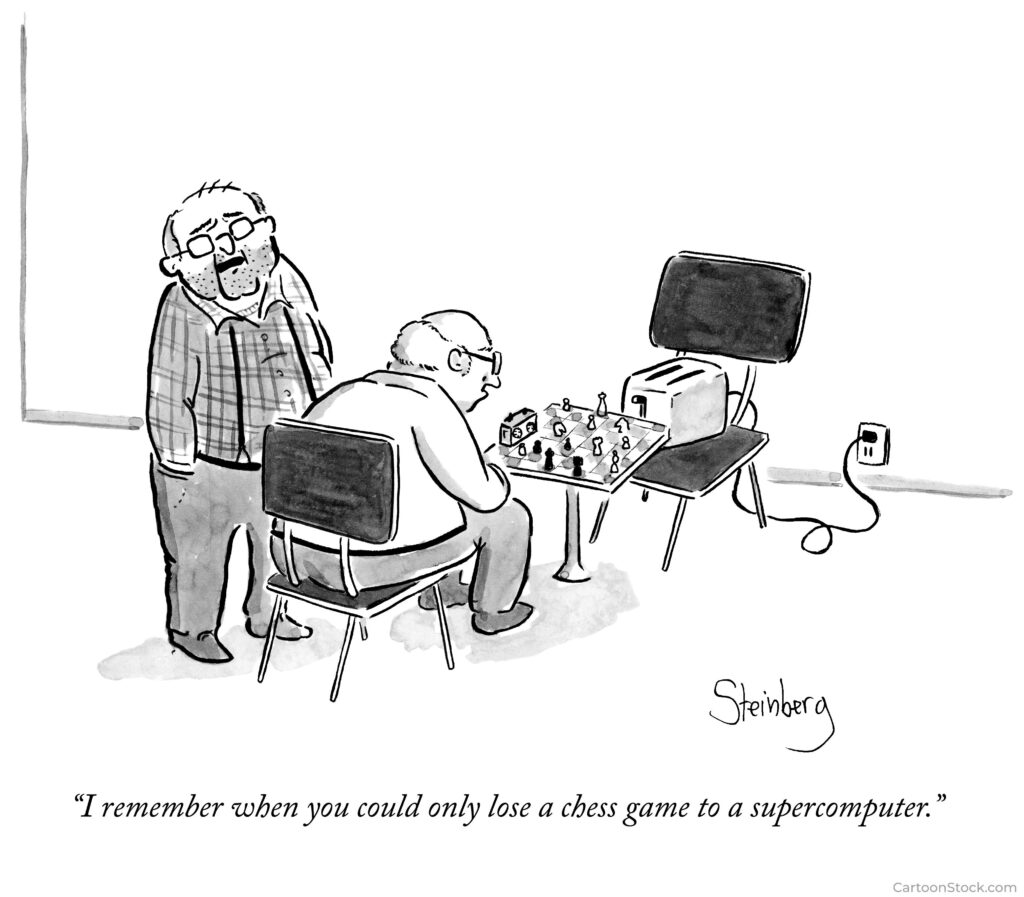
AI has been around since the mid-1950s. I asked my tech guru in the 1970s to define AI, and he responded, “It’s using a computer to do things we haven’t done before.” In the beginning, one of the goals of AI was to teach a computer to play chess. In May 1997, Deep Blue, the IBM supercomputer, defeated the world chess champion, Garry Kasparov.
AI portends to be one of the most significant civilizational transformations since the Industrial Revolution. However, opinions are mixed. AI techies are generally optimistic. Some of the more philosophical AI experts are apprehensive. Still, most of the active practitioners are very upbeat, not only in terms of the power of the technology, but also concerning the overall positive benefits to society.
It is a different story among the general public. They are apprehensive and concerned about AI. Among several possible problems, they anticipate a reduction in employment opportunities for themselves and their children. Many are also worried about AI being used by organizations and governments to manipulate and control them.
Most corporate CEOs, government leaders, and investors only see the promise of increased efficiency and profit. Interestingly, their optimism is likely to make them the first victims of AI. Companies, governments, and investors routinely and predictably fall into the “silver bullet” trap. These folks, while by no means babes in the woods, nevertheless succumb to the hype. They have complex problems and seek “easy” solutions to them. They hire consultants and AI czars to guide them. Predictably, the consultants and czars urge them to make significant AI investments.
We have seen this trap many times before. Remember when John Scully of Apple said in 1992 that everyone would have a personal digital assistant that would know everything about us and help us manage our schedule and find the best route to our next appointment? Remember when the internet would magically change everything during the dot-com bubble in 2000? Remember around 2015 when blockchain was going to revolutionize everything? Remember when Elon Musk said that his Tesla would not require the active involvement of a driver by 2016? Remember when Facebook was rebranded to Meta in October 2021, and this new company was going to transport us into virtual reality?

The truth is that most of the predictions and hype will eventually come true. Scully’s 1992 personal assistant was not even partially realized for another 20 years, and it was not exactly as he predicted. The Dot Com was a bust in 2000 because the Internet did not immediately transform everything. The predictions for most of these new technologies, including AI, may become a reality, but never as quickly as initially promoted.
Good stock traders understand how overhyped “good” products and services can lead to disaster. When traders place put or call trades, they do so within the framework of time. A trader can have the correct instinct for a given company’s stock. The trader might think the company is failing, and so he places a put option for three months in the future. Unfortunately, the stock may not fall because the company did well for a short while, so the investor loses their bet. However, a month after the expiration of the put contract, the stock loses 50% of its value. The moral to the story is that investors have to bet not only on the quality of stocks, but also on the timeframe.
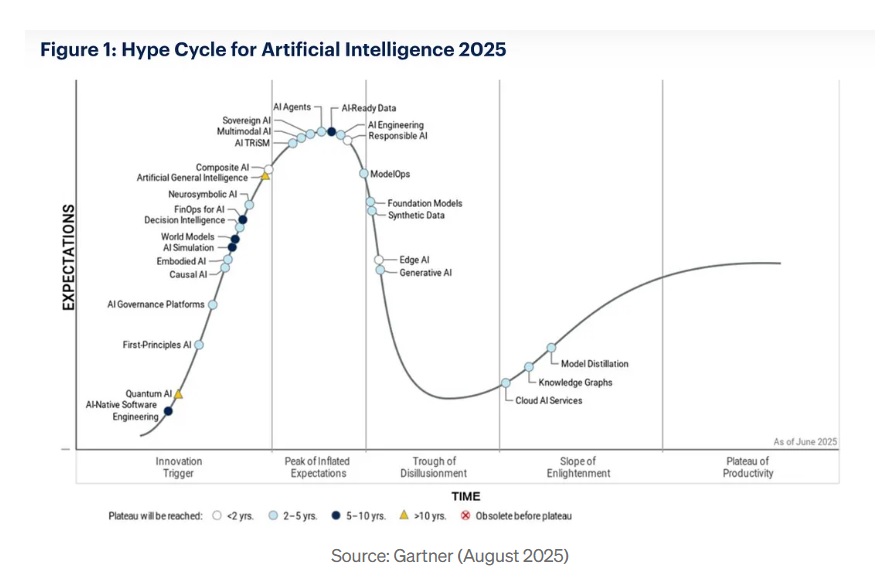
The development and maturation of today’s AI is similar. We are currently going through a period of “promise” and hype. It will take years for AI to mature. An information technology consulting company that I’ve followed for over 25 years, the Gartner Group, has an excellent “techie” chart to describe the current state of AI. The shape of AI’s hype cycle is not unique. It recurs again and again in different eras.
There are many flavors and dimensions for the catch-all term AI. I will not iterate through all of them. However, I recently did a partial deep dive on one aspect of AI. I was interested in using AI to create short videos for YouTube and Instagram.
It is possible to set up an iPhone and talk about how to bake bread for 60 seconds. However, I wanted to add some fancy graphics, music, subtitles, and other features. Using my favorite search tools, Perplexity.ai and plain old Google.com, I discovered many seemingly cutting-edge video-generation tools. I investigated the “top” 15 or so. Much to my surprise, these individual companies had almost the same tools, the same prices, and the same websites. Sure, there were differences, but I was struck by how uniform they were. Their similar marketing approaches also struck me. They all offered a “no cost” plan, a beginner plan, an advanced plan, and a corporate plan. However, almost every company had a complex algorithm for “usage.” To do something, you need to purchase credits. When you create the first draft of a video, you use 25 credits. If you do something else, you use 15 credits. It was never really clear what the association was with activity and credits. On one test, I blew through $50 for a terrible video. It was bad because my text prompt to create the video bore little resemblance to the result. I immediately cancelled my account with that company.
For the foreseeable future, CEOs, government officials, and investors will be investing in “a pig in the poke.” They need to do more with less, and AI promises to do more with fewer workers. Since AI is a new technology, it is not like buying a well-known product like a bag of diamonds that can be inspected and verified. This fact will give them some good excuses when their investments do not pan out. Of course, this makes the allure and the hype more seductive, but the mistakes more expensive.
The savvy CEOs, government officials, and investors SHOULD focus on three main issues: a) can AI help improve the operation of a specific organization, b) can the success or failure of AI be measured, and c) after implementing AI, and if it fails, can the organization recover? These are time-honored steps to organizational success. However, the hype and excitement of new technologies often flummox leaders who are more concerned with the next quarter or election cycle.
Not all of America’s corporate, government, and financial leaders have or will carefully study AI. Hence, many will wildly “throw money” at AI without understanding it. One pundit said that AI investments in software, hardware, and electrical energy in the near term might be greater than America’s total consumer spending. Those investment dollars must come from somewhere.
Others will ignore AI and ultimately lose as their competitors successfully embrace and utilize AI.
Troubling was the executive orders signed by President Trump to “remove barriers to American leadership in AI”. These executive orders and the funding of the “One Big Beautiful Bill Act” are examples of filling the pig troughs with lots of our taxpayer money and removing all the guardrails. I will preemptively flash these words across a future post, “I told you so.”
The general public will be on the sidelines as their 401(k)s and jobs will be threatened by the AI decisions of CEOs and their ilk. I am hoping for the best. However, the bottom line is that everyone will believe what they want to believe. Some will regard AI as a godsend, while for others, a nightmare. The truth probably lies somewhere in between…but the truth will not be recognized immediately.