

The Caterpillar and Alice looked at each other for some time in silence:
At last the Caterpillar took the hookah out of its mouth and addressed Alice in a languid, sleepy voice.
“Who are you?” said the Caterpillar.
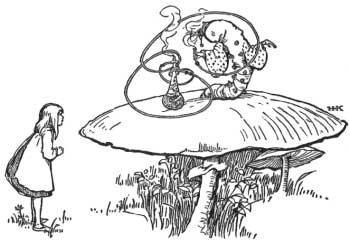
Alice replied, rather shyly, “I—I hardly know, sir, just at present—at least I know who I was when I got up this morning, but I think I must have changed several times since then.”
Alice’s Adventures in Wonderland by Lewis Carroll, 1916
What is Identity?
Identity gives people a sense of belonging because it connects them to others who share similar interests or backgrounds. Having a clear identity provides emotional stability and adaptability in uncertain times and situations. Without an identification with some group or cause, people are detached from others and often guarded, defensive, and powerless. Also, those whose identity is unsure or in transition from one identity to another can cause psychological stress.
Having an identity does not solve all our problems. Almost everyone goes through developmental phases (e.g., childhood, adolescence, etc.), and the circumstances of a person’s life may change, and thus our identity may change. A straightforward example would be a young boy who wanted to become a star basketball player. At eight, his parents bought him a basketball, and he played continually with his friends until he was a high school freshman. Unfortunately, he was very short for his age, and he was slow. He could dribble and shoot, but he could not compete with taller, faster boys. Instead of continuing to identify with a basketball player identity, he altered his focus and interactions to a different activity, group, or cause.
In everyday life, most people have multiple identities because they have numerous roles, backgrounds, and communities. For example, a person can be a parent, friend, supervisor, and a member of a church at the same time. A normal person commonly integrates these identities; however, when roles or communities conflict, it can be challenging. In rare cases, a person may suffer from Dissociative Identity Disorder (or multiple personality disorder). This disorder involves a person with two or more distinct identities, each with its separate behaviors, memories, and mannerisms.

Political Identities
Political identity is a special type of social identity. It is concerned with politics, government, and power structures. Although other types of social identity, such as religious identity, might be similar or overlap, political identity stands alone because it is tied to a particular party, ideology, or movement.
Given the nature of political parties in 2025, one’s political identity is a significant issue for many Americans. The increase in political extremism and the brazen violations of regular political intercourse have caused a fracturing of national solidarity. When Americans stand for the National Anthem, they seem to be saluting different flags.
Most of us are puzzled by the decline of civility and the tremendous increase in mis- and disinformation. We think to ourselves, “If only those people would think logically or confirm the validity of the wild rumors and ongoing propaganda campaigns.” This thinking is not limited to Democrats, Republicans, Independents, Libertarians, Christian nationalists, and others. Each political group embraces its beliefs and spends most of its time confirming that its group is on the correct path and the other groups are totally or at least partially on the wrong one. Most of us engage in some version of circular reasoning. Our identity is connected to our group because our group is good, just, and going in the best direction.
Making the States United Again
A simple solution for uniting a divided nation is to go to war with another country. Unless a country is beyond salvation (Czarist Russia’s decision to enter World War I hastened its dissolution in 1918), fighting another country usually causes the country to unite.
Countries often unite after one political party or group of elites causes some aspect of the society to collapse (e.g., the economy, public safety, national safety, public health, education, etc.) The financial crisis of 2007-2008 exposed the folly of financial deregulation. This caused the Democrats to gain 8 Senate seats, 21 House seats, and the White House shifted from George W. Bush to Barack Obama.
Absent a war or catastrophe, what can be done to unite a country?
Trump’s approach embodies authoritarianism. His style uses playground-style bullying to bend both supporters and opponents to his will. Any honest person can recount the desiccated husks of former allies and enemies. He solicits acquiescence and submission. Once someone bends the knee, he either kicks them aside (e.g., Attorney General Jefferson Beauregard Sessions III, Vice President Mike Pence, Secretary of State Rex Tillerson, etc.) or he continues to require them to toe the line. Disloyalty to Trump ALWAYS means that he will try to destroy the person. His behavior is textbook authoritarianism.
Authoritarianism appeals to many conservatives. While not all conservatives favor it, the more insecure ones do. However, there is a problem. Authoritarianism has not been long-lasting after the demise of monarchical empires. After people experience freedom, liberty, and democracy, it is hard to revert to the rule by a king or dictator. Granted, some countries continue to cling to authoritarianism, such as Russia and China, but most others either have or aspire to have a modern democracy.
Democracy or “rule by the people” stands in opposition to authoritarianism. Authoritarianism is simpler since one person or a small group controls the country; people only need to follow directions. Democracy is more complex because differing factions and subgroups need to debate and compromise before making significant decisions. Democracies are also based on the rule of law. After discussing and compromising on laws, citizens are expected to obey the law. History has shown that democracies are more successful in the long run because citizens are more likely to feel they belong to the larger nation. In the long run, subjects in authoritarian regimes are required to appear loyal to the regime, but most resent their subservience and “go through the motions” of citizenship. In an economic sense, there was a phrase in the old USSR, “So long as the bosses pretend to pay us, we will pretend to work.”
Democracies go through phases in which they suffer from what the French call ennui. Ennui is a feeling of weariness and discontent, often associated with boredom. Paradoxically, the relative “success” of democracies causes many to become alienated from their society. Discontented ennui frequently accompanies those who want the world to operate the way they think it should (there are authoritarians in every democracy). Moreover, no democracy is 100 percent effective. Some percentage of the population will inevitably fail to benefit from the nation’s bounty. Thus, there are always those who are disenchanted due to ennui, relative poverty, or a psychological sense of powerlessness.
Assuming that most Americans want to retain our democracy over authoritarianism, how can America become more united?
Name-calling, tribalism, and dirty tricks might feel natural among the contentious factions and parties, but these only make matters worse. Divisiveness or winner-take-all are not solutions.
I believe that political identity and team selection are the key. Instead of creating propaganda, appealing solely to rationality, or binding followers based on race, education, or region, I think focusing on issues that matter to the broadest segments will cause wavering voters to move toward more moderate and uniting solutions.
Appealing to voters based solely on personalities (such as Trump) diverts our collective attention from the critical political issues. Debates over policies and practices are more significant than reading the tabloids to see which politician was caught in bed with a hooker last week. However, based on human nature, hookers are more titillating than policy debates.
Every election allows voters to change their voting pattern. Most retain their party affiliation and voting pattern, but in times of crisis or revelation, some change their allegiance. Many Americans are Independents, and thus, their votes are nearly always in play.
Political parties typically assume their base will remain loyal. This is ordinarily true, unless they feel betrayed or believe their party has gone off the rails. Many Southern Democrats ultimately switched to the Republican Party after President Johnson signed the Voting Rights Act of 1965. Many Southerners felt betrayed and initially formed third parties (for example, the George Wallace, pro-segregationist American Independent Party).
We all know that the genie is out of the bottle. George Washington’s goal of a government without political parties is ideal. However, America must return to a higher standard of cooperation and civility. We need to emphasize things that unite us, rather than divide us.
A Metaphor for Voting Decisions
If democracy means rule by the people, then the people should take their responsibility seriously. This is especially true in a representative democracy in which we select people who approximate our values and beliefs. Voters need to understand the salient issues and the trustworthiness of those running for elective positions. Unfortunately, despite our Declaration of Independence, not all men (or humans) are created equal. Some are better informed both about the issues and the candidates. Some have vested interests that bias them one way or the other and often do not value the greater good.
Despite the inherent problems with democracies, voters are regularly faced with elections. They will make their decisions based on incomplete, inaccurate, and biased information. How can we optimize in an imperfect world?
I am not an expert on voting, but I believe that most voting is based on identity politics. Of course, single issues (for example, voting on a school bond) draw people to vote, but most voting is based on identity.
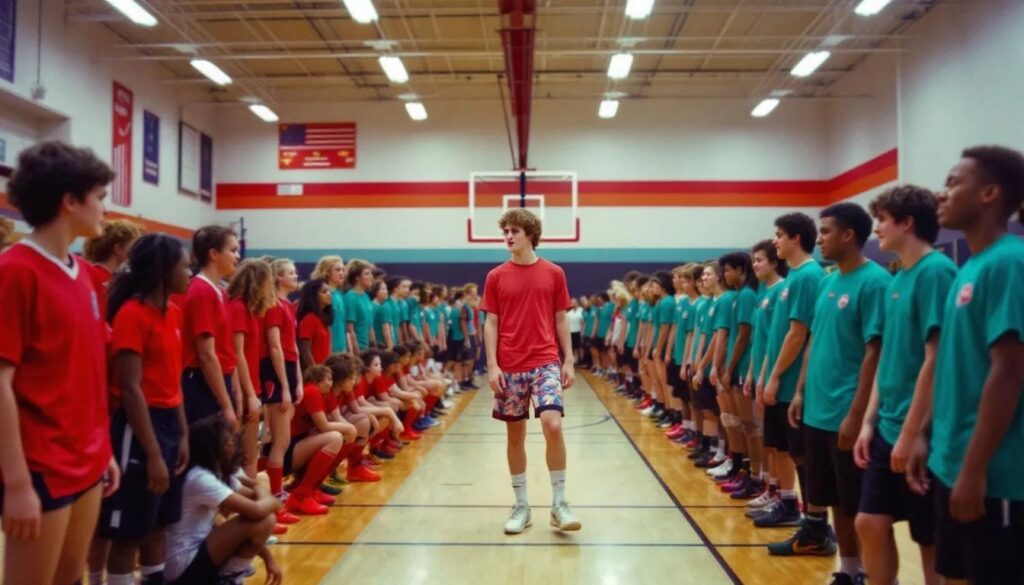
I liken it to a young middle schooler on the first day of physical education class. The person must decide which sport to select for the school term. Will it be soccer, volleyball, swimming, or basketball? However, in the USA, the choices are primarily limited to two: soccer or volleyball, because we have but two viable political parties.
Young middle schoolers look at the people lining up for soccer and volleyball. They ask, “With which group am I more comfortable?” There are factors such as whether I’m better at soccer or volleyball, or which one I will enjoy more. However, the decision will be heavily influenced by the people in the two lines. The thinking process might go something like this: “I see my friend Billy in the soccer line”, or “All those volleyball players are very tall, and I am short.” My key point is that the line that we more closely identify with will be the line we choose.
From the assumption that political identity is vital, how can a candidate or party use this assumption to sway voters?
The Republican Party was taken over by Trump in 2016. His party has essentially won the political identity contest. His inept handling of the Covid crisis and his ineffectual, limited takeover of the Republican Party in the first term led to his defeat in 2020. He won in 2016 and 2024 because more people identified with him than his two female opponents. A key identity factor was undoubtedly the fact that he was a man and his opponents were female. Male chauvinism is alive and well in the hearts of many American men and a few women. However, other identity factors caused the two Democrats to lose.
Trump and his MAGA allies played their immigration and WOKE cards skillfully. They identified all Democrats as soft on immigration and hard on support for transgender youth. They created a catch-22 for Democrats. Democrats supported limited immigration and the rights of transgender people. However, Democrats were unable to explain their immigration policy, and they let the MAGAs convert support for transgender rights into the perception that Democrats would actively promote a larger transgender population. Simply put, MAGA won on many other issues, but the bottom line was that they won the identity battle. More Americans identified with Trump than his two female opponents because the Democrats were seen as educated elitists who could not relate to blue-collar workers, small business owners, and religious conservatives.
The Future
I believe it is an objective fact that if Trump’s new MAGA Party learns to moderate its excesses and does not drive the country into a depression or war, there is a good chance that the new party will survive Trump. However, if they continue down the authoritarian path, I pray the MAGA Party will go underground to become like the John Birch Society of the 1960s.
It will benefit Democrats if Trump drives the country into a significant financial downturn or a foolish war, but no one wants either to happen.
If the Democratic Party learns to focus on identity politics instead of parsing policy papers and letters to the editor, then they have a chance to win back the government. Getting an A+ on a policy paper or book may get someone tenure, but only if the tenure-granting institution still exists and has the funds.
The Democrats have a massive uphill battle. They have alienated the majority of working-class Americans, religious conservatives, small business owners, rural America, and many in corporate America. They need a political revolution on par with FDR’s New Deal. They need to enact campaign financing reform, stabilize the judiciary, reform immigration (instead of making it a campaign issue), prevent another 2007-2008 financial crash due to lax controls, and take many other urgent actions.
Democrats need to be perceived as the sport that middle schoolers want to sign up for. Otherwise, maybe they need to go to the study hall or join the photography club.
Democrats need to try to connect with everyone, including MAGA voters. Interestingly, MAGA voters might be vulnerable voters because many are vulnerable people. The Comedy Center news/comedian, Jordan Klepper, has demonstrated an uncanny ability to relate to the MAGA crowd.
He also diagnosed the future challenges for Democrats when he appeared on Gavin Newsom’s podcast the other day: